Last updated on October 18th, 2023 at 11:03 pm
It’s been over three decades since Chernobyl experienced the most massive nuclear disaster in history. Even after billions spent cleaning up and at least four thousand dead, the area itself is a ghostly shell of itself, long reclaimed by plant and animal life.
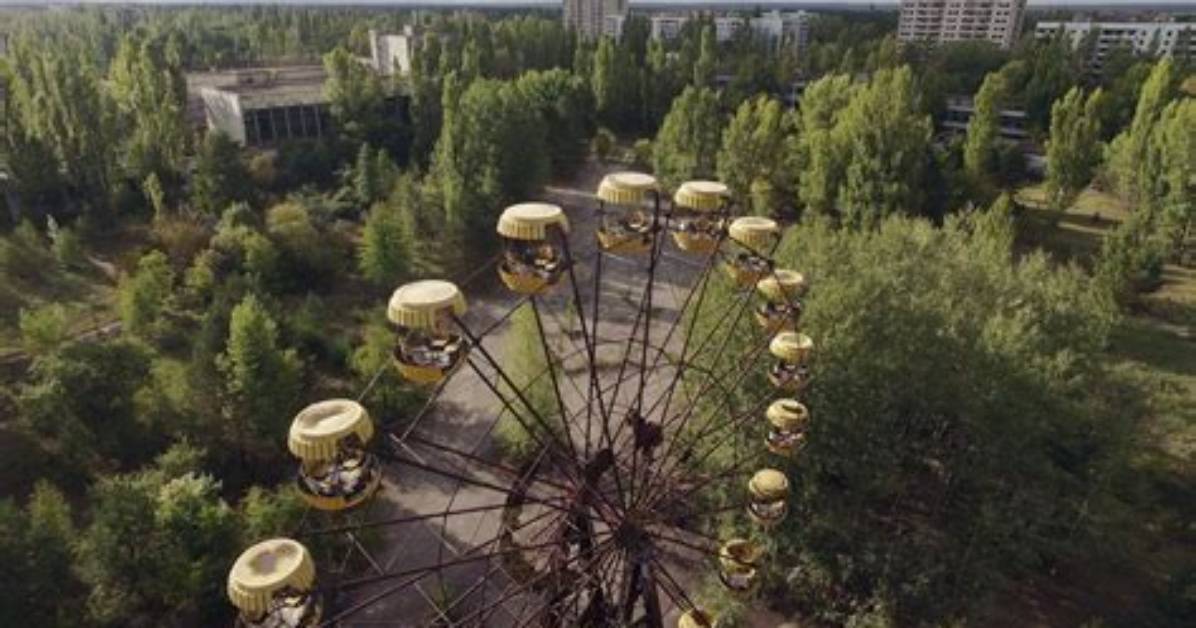
Pripyat, the town built next to the plant, was intended to be a symbol of Soviet strength. A city of the future that could only be matched by the massive achievement of nuclear power. Today, it’s merely the Chernobyl exclusion zone, long since abandoned, tragically full of past relics.
A Brief History of Chernobyl Before The Disaster
With construction beginning in 1970, Chernobyl was the third Soviet RBMK nuclear plant and the first on Ukrainian soil. By 1977, reactor no. 1 was operational, with four more completed by 1986.
The USSR had big plans for Chernobyl. A fifth reactor was almost complete, and seven more were planned to go live by 2010. At the time of the disaster, it provided 10% of Ukraine’s power.
How The Chernobyl Meltdown Happened
Problems started early on April 25, 1986. The day-shift planned a routine test as part of a reactor shut down. Because of another regional power plant shutdown, the test didn’t move forward to meet new electric demands.
The delay ended up lasting until the night-shift, giving them very little time to prepare. If things had gone to plan, the night shift would have only had to monitor the after-effects of the initial test.
Even worse, Anatoly Dyatlov, the deputy chief-engineer, decided to oversee the test, overriding senior personnel’s objections with more hands-on experience.
The test called for a gradual power decrease in reactor No. 4. When the power dropped to the target of 500 MW, it suddenly dropped down to 3 MW, a near shutdown state. We don’t know the circumstances because the engineers who would know died in the hospital of radiation poisoning.
While trying to continue with the test and get power back to normal levels, a sudden spike in power caused the reactor to explode, knocking a 1,000-ton steel lid off the top of the reactor.
Fifty tons of hazardous material shot into the air and drifted all over the surrounding area.
Plant and emergency workers went to work on the reactor. After a day of poor communication and failed cover-ups, officials began evacuating the city around it.
The rest of the world had no idea what was happening. It only became known because Sweden detected the elevated radiation levels and pushed the Soviets to come clean.
At this point, around 100,000 people were in the midst of being evacuated, and the USSR finally announced that there had been a nuclear disaster at Chernobyl.
Over the next weeks and months, workers risked their lives to contain the fire and radiation, eventually containing the reactor in a steel and concrete dome. Many died horribly in this process, but they heroically contained the plant.
Decades later, the long-lasting effects of the Chernobyl disaster are finally taking shape.

