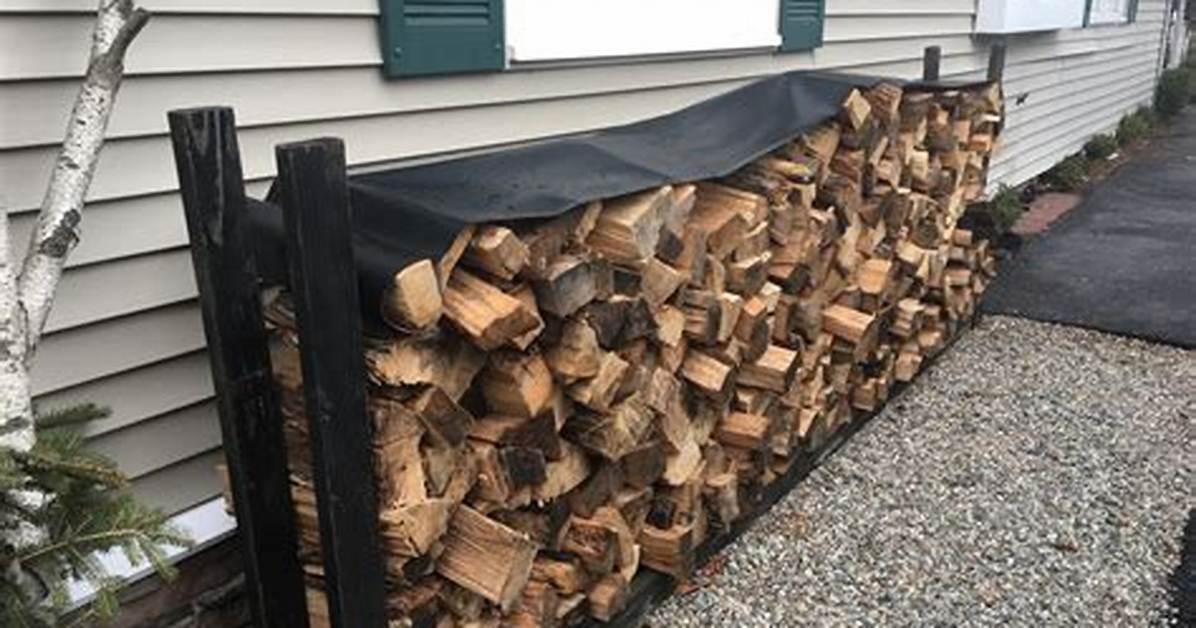
For those with a fireplace or wood-burning stove, cutting and storing firewood is an important issue. Knowing the proper way to cut, stack and store firewood outdoors will provide long-burning wood throughout the winter.
When wood is stored improperly, it can rot, mold or deteriorate quickly, so stack and protect firewood correctly.
Fresh Firewood
It is easiest to split freshly cut logs, so wood thicker than 8 inches in diameter should be split into logs soon after cutting. However, freshly cut wood needs to dry completely before it is burned. A wood stack of freshly cut wood should not have any covering over it to allow the firewood to dry out completely. Covering fresh wood will create condensation on the tarp or plastic covering and cause the wood to mold and rot. Since the wood cannot be burned, it doesn't matter that it gets rain or snow on it.
Seasoned Firewood
If firewood is seasoned, dry and ready to burn, then it should have a tarp over the top of the stack to protect it from the elements. However, do not cover the sides of the stack with a tarp, or the wood may rot. Even after the wood is dry, the stack needs good air circulation to keep moisture out. Although it seems counter-intuitive, wood will stay drier with just the top covered than it would if the stack were covered all the way to the ground.

