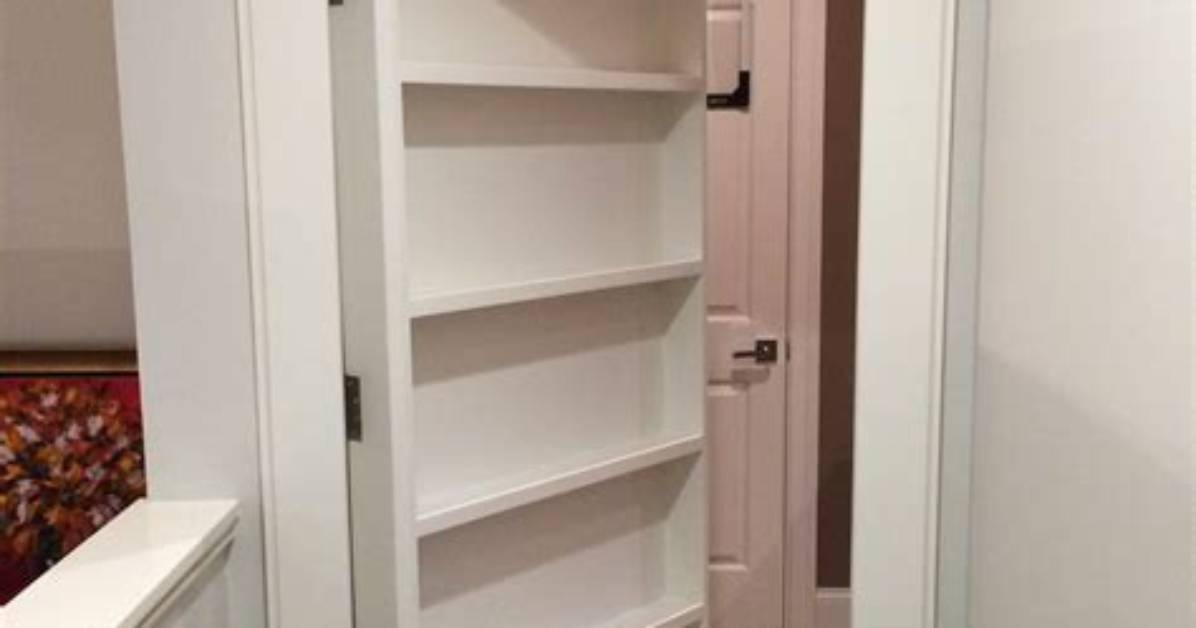
Secret rooms aren't just for castles any more. Using relatively simple tools, materials and imagination, you can make your own secret chamber within your home.
Thanks to movies and novels, the very mention of secret passages is enough to conjure visions of mysterious castles, haunted houses and intrigue, but in fact, many ordinary homes once had -- and some still do have -- small secret spaces built into them. Often these were utilitarian places such as wine cellars, broom closets or tiny safe-like rooms for storage of the family silver. In 16th-century Europe, many wealthy homes had secret compartments known as "priest holes" for hiding politically persecuted Catholic clergy from Protestant authorities. Whatever the time, the place or the reason, secret rooms have been more common and less mysterious than Hollywood or popular fiction ever imagined.
Simple Secret Room Doors
Armoire or Free-standing Closet Ideas
- Obtain an armoire or free-standing closet -- the larger and taller the better, as long as it is appropriately scaled for the room. Cut a door-size portion out of the back of the piece of furniture and screw the remaining back to the existing door-opening leading to the secret room. The armoire will appear to be just what it is and can still be used as such; hanging clothing inside will hide the opening beyond. If the door to the secret room opens into that room, paint it to match the interior of the armoire. That will help disguise the opening when the door is closed.
- For an even simpler version of the armoire-disguised door, add wheels to an armoire and hinge it to one side of the original door opening. Access the secret room by pulling out the unhinged side of the armoire. A handle screwed to the center back of the armoire gives a place to grip it from the other side so it can be closed behind you. Due to the recess behind the armoire, the handle will not prevent it from setting flush against the wall when closed.

