Military history is filled with tales of elite groups of fighters that stand apart from the regular military. Exceptional fighters who have proven themselves in battle.
These groups were called on for special missions. They had reputations for being the best of the best and were known worldwide. They struck fear into their enemies.
Examples range from the indomitable Roman Centurions and Spartan warriors, to today’s elite military groups like the Navy SEALS and Delta Force.
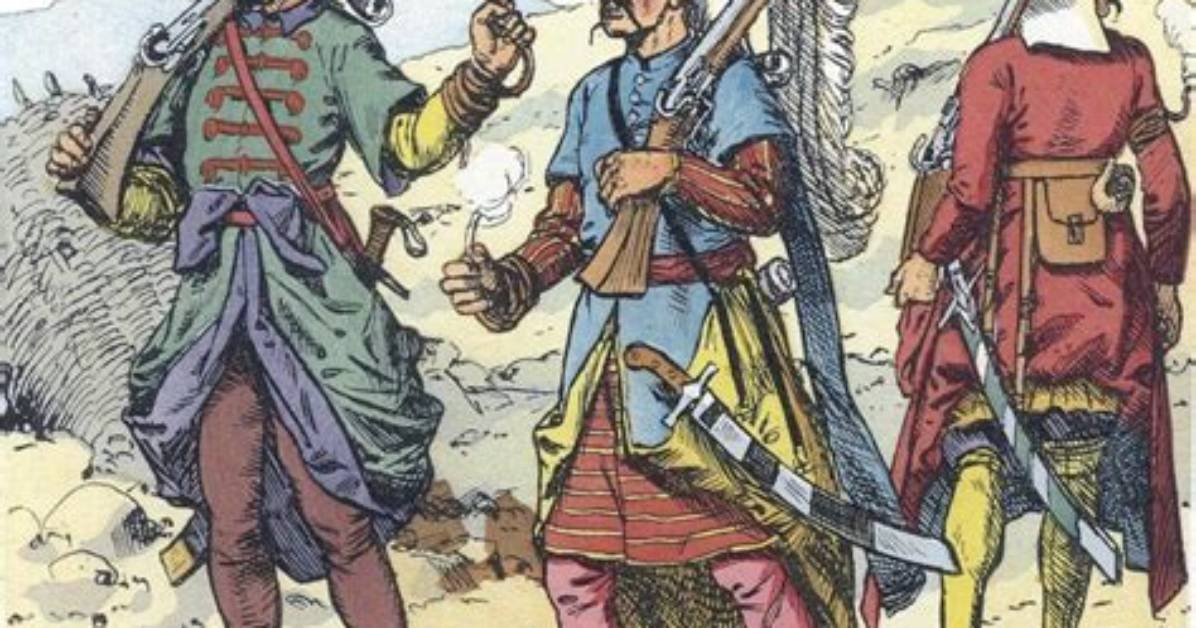
Among these legendary groups, the Janissaries of the Ottoman Empire stand out as one of the most feared and respected military forces in history. Not only were they highly skilled warriors but they were trained and educated in other fields such as science, history, and literature.
In this article, we will explore the fascinating history of the Janissaries and the mark they left on military training today.
History of Janissaries
The Janissaries, known as the Yeniçeri in Turkish, can trace their origins to the early years of the Ottoman Empire. They were established during the reign of Sultan Murad I in the late 14th century.
The Janissaries were initially a small and elite force composed of enslaved Christian youths. These young recruits, known as devshirme, were taken from the empire’s Christian territories, converted to Islam, and trained for military service.
Originally created as personal bodyguards for the Sultan, the Janissaries quickly evolved into a powerful military force with significant political influence. Their role rose above and beyond those of the traditional infantry. They became a versatile force employed in various campaigns, both within and beyond the Ottoman borders.
The Janissaries played a crucial role in several key events throughout Ottoman history. One notable example is the capture of Constantinople in 1453. This brought about the end of the Byzantine Empire.
Their presence in major battles and campaigns, such as those against the Safavids and the Habsburgs, further solidified their reputation as a highly skilled and brutal military force.
Recruitment and Training
The founding of the Janissaries lay in the strategic and controversial method by which they were recruited. This was known as the devshirme system. It involved the drafting of young Christian boys, usually between the ages of 8 and 18, from the empire’s Christian provinces.
These young recruits were often taken from impoverished families or orphanages. There were several advantages to this system that benefited both the empire and the new recruits:
Loyalty to the State: Selecting recruits from poor families or orphans meant that these individuals often had weaker ties to their own communities and families. This reduced the likelihood of divided loyalties and ensured that the Janissaries would be more dedicated to the Ottoman state.
Social Mobility: The devshirme system offered a chance for individuals to rise above their socio-economic circumstances. It provided an opportunity for upward social mobility that they would never have on their own.
By joining the Janissaries, these recruits could rise through the ranks based on merit, achievements, and loyalty to the Ottoman state. This gave opportunities to those who would have otherwise spent generations in poverty.
Strategic Advantage: Poor families often lacked the resources to provide education or opportunities to their children. By selecting recruits from economically disadvantaged backgrounds, the Ottoman Empire could shape and mold them to its specific needs.
Reduced Opposition: Conscription from poor families or orphanages helped minimize opposition to the devshirme system. Families in dire economic circumstances might see the recruitment as a chance for their children to escape poverty.
Additionally, orphans without familial ties had fewer advocates to challenge the system. This made it easier to implement.
Training and Education
During their training, the Janissaries received more than just a military education. They were known for their knowledge in various fields including science, history, and literature.
This created a well-rounded force capable not only of executing military strategies but also of comprehending the world around them and adapting to changing times.
Scientific Knowledge
Janissaries were taught a foundational understanding of scientific principles. This knowledge included aspects of mathematics, astronomy, and engineering. This allowed them to navigate and contribute to the technological advancements of their era.
History and Literature
The Ottoman Empire understood that those who don’t know history are doomed to repeat it. The Janissaries’ education encompassed a study of historical events.
This helped inform their decision-making on the battlefield. Literary training enhanced their communication skills and provided a cultural context that enriched their overall perspective.
Cultivation of Leadership Qualities
The emphasis on education within the Janissary system went beyond acquiring knowledge. It aimed at nurturing leadership qualities.
Janissary officers, known as “cehnedar,” were expected to demonstrate not only military expertise but also a deep understanding of politics, diplomacy, and cultural nuances. This combination of skills allowed them to serve not just as warriors but also as leaders in the Ottoman Empire.

