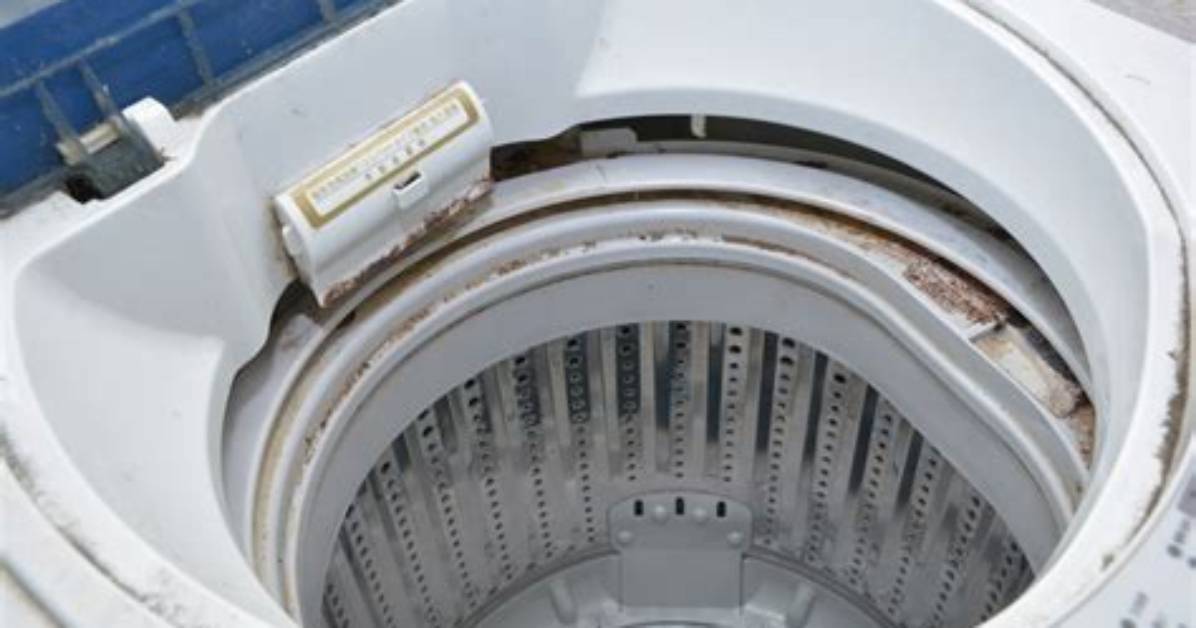
You can easily tell when mold has become a problem in a top-loading washing machine because the washer and the items washed inside begin to smell bad. This musty smell is a strong indicator that mold has developed in the washer and attention is required.
The mold must be cleaned out of the washer and the cause of the mold resolved to prevent the problem from continuing.
Wet Items
Mold develops or flourishes when damp or wet items are left inside the washing machine for a period of several hours or even days. Remove items from the washing machine promptly after the wash is complete as the warm, dark environment is a prime breeding ground for mold.
Detergent Use
While the use of laundry detergent in a washing machine seems harmless, not using the laundry detergent correctly can actually cause problems. If the washing machine is an energy-efficient top-loading model, high-efficiency laundry detergent should be used at all times. In addition, only the amount instructed on the laundry detergent should be used for every wash load. The use of regular detergent in an energy-efficient washer or overfilling the washer with too much detergent can leave a residue in the tub, which can get damp and develop mold.

