| Cell Phone Repair Service for small repairs. Bring it in to the booth in the morning (before 9) and pick it up (after 3) on the same day in the afternoon. Or visit us in the Nokia Shop Berlin at Hauptstrasse 80a in Friedenau and have your phone repaired immediately. | |
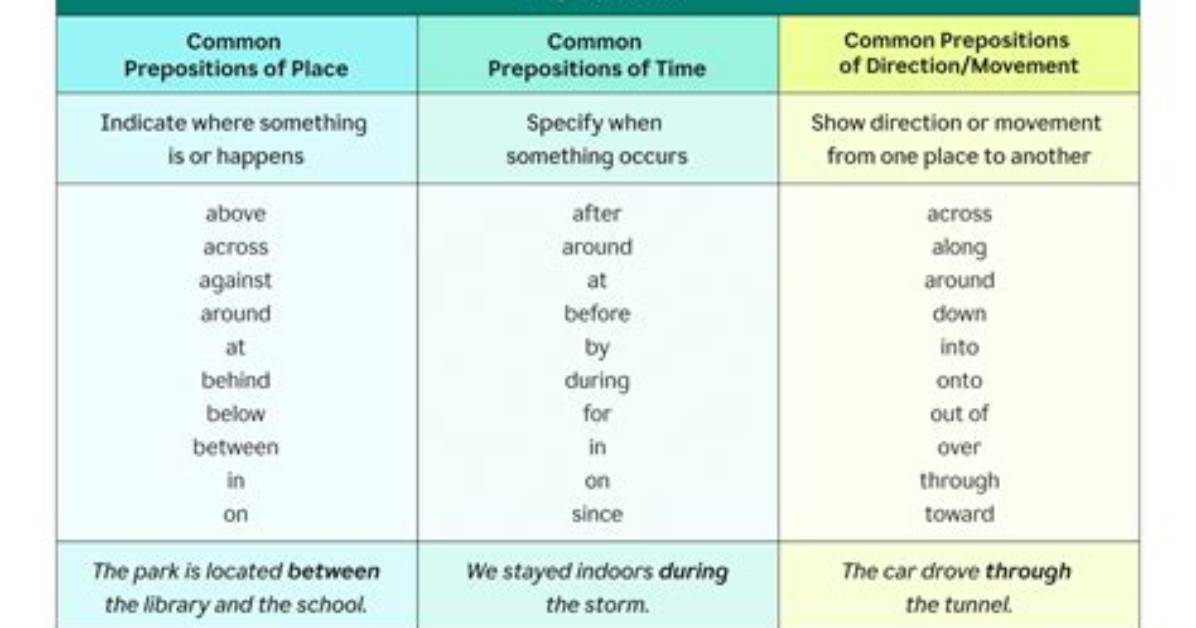
Prepositions in English:
-
Let's go to the beach.
She works for a bank.
What did you think of it?
Who's the man in the gray flannel suit?
The food in my refrigerator is all past its sell-by date.
He isn't rich in the normal sense.
That's enough of that. - She lives across from the church, next to the vicarage.
According to his wife, he's a philanderer, on top of being a cheapskate.
Pursuant to your inquiry, we are sending you a brochure.
Aside from his drinking, he's a good colleague.
Thanks to your hard work, we are now close to the answer.
In spite of our concerns, we are acting in accordance with his wishes. - What were you thinking of? (= Of what were you thinking?).
That's the man she danced with. (= ... with whom she danced).
I don't know which house you live in. (= ... in which house you live). -
With whom do you wish to speak?
It's all right with me.
We did it just for her.
They're a nice family, except for him. -
Do you wish to take part in a survey?
I could die for shame.
She believes in telepathy.
We're relying on you because we have faith in your ability.
Try to be on time.
He's waiting for his supper. - He arrived without his partner.
I can't do without your love. - "He shall be buried [...] without the gates of Jerusalem" (Jeremiah 22:19).
"Prepositions" as a class are among the most frequently used words in the language. They indicate the relationship of a noun (or pronoun) to another element in the utterance. The preposition joins with a noun (or pronoun) object, and any intervening modifiers, to form what is known as a "prepositional phrase". Such phrases can modify verbs, nouns, or other modifiers. The list of English prepositions is very long. Here are just a few examples:
Some prepositions are a combination of words:
Despite some zealous grammarians' objections, prepositions can sometimes follow the noun or pronoun that they govern, even if that puts them at the end of the sentence:
The noun or pronoun that a preposition governs is in the "objective" case, which is distiguishable only in certain pronouns:
Prepositions are often part of idiomatic expressions. Someone learning English needs to memorize which preposition goes with which:
Most prepositions have a great variety of meanings — "for", for example, has well over a dozen. Only a few prepositions denote a narrow range of possibilities. One of those few is "without", which indicates the absence of something:
But even "without" can have a further meaning: there is an archaic use denoting "outside":
| Please exit your car, ring (the bell) to the left of the door and announce yourself to the porter over the intercom. | |
Prepositions in German:
Prepositions work in much the same way in German, except for the added complication that the nouns and pronouns that they govern are declined, depending on whether they are in the accusative, dative, or genitive cases. The choice of case is determined by several different factors.
Most German prepositional phrases begin with the preposition, but in some the preposition can follow the noun or pronoun that it governs.
Also, as explained below, there is a special system for constructing prepositional phrases with pronouns, using what are called "da- and wo-compounds" (see below).
Note: prepositions should not be confused with separable prefixes.
Accusative Prepositions:
One set of prepositions is always (or, in the case of "entlang," almost always) associated with the accusative case: The most common ones are "bis", "durch", "entlang", "für", "gegen", "ohne", "um", and "wider". Here are examples of their most frequent meanings1 (More specialized uses are found below):
| Er bleibt bis nächste Woche. | He's staying until next week. |
| Die Liebe geht durch den Magen. | The way to a man's heart is through his stomach. |
| Sie geht den Weg entlang [Note the word order]. | She's going along the path. |
| Er tut alles für seine Tochter. | He does everything for his daughter. |
| Er tut alles für sie. | He does everything for her. |
| Was hast du gegen ihn? | What do you have against him? |
| Ohne Geld geht gar nichts. | Nothing can happen without money. |
| Ohne mich! | Count me out! |
| Er läuft um das Haus. | He's running around the house. |
| Seine Handlung war wider das Gesetz. | His action was against the law. |
In informal speech, some of these prepositional phrases are contracted (if the article is "das"):
| Wir kaufen es fürs Kind. | We're buying it for the child. |
| Sie läuft durchs Haus. | She's running through the house. |
| Es geht mir ums Prinzip. | To me it's a matter of principle. |
Dative Prepositions:

