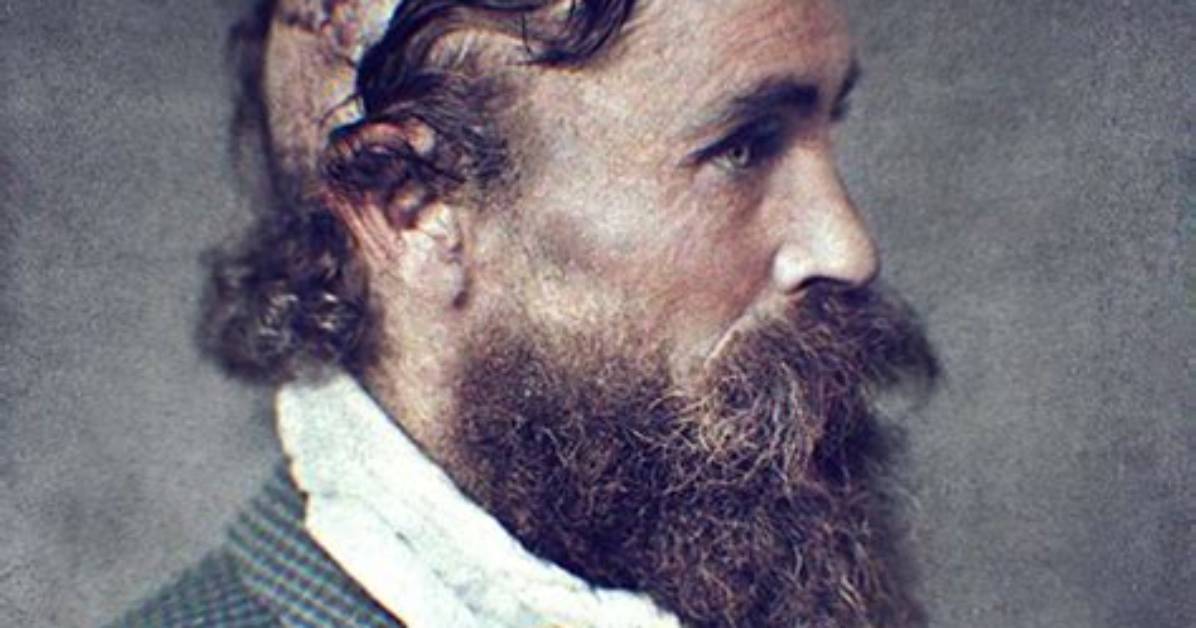
In 1890, a remarkable photograph was taken. It captured the scars of a little-known American man. He was a survivor of an unimaginable ordeal in American frontier history.
The picture would continue to pass down through the ages. It was a reminder of not only a distant time in American history but of the individual it depicted – Robert McGee.
The story of Robert McGee, a young orphan who embarked on a westward migration in search of a better life, is a captivating one to behold. Little did he know that his journey would lead him to a fateful encounter with Sioux warriors.
This encounter left him scarred but defiantly alive. His flesh was ripped from his skull in a brutal scalping incident. It occurred in the summer of 1864 when he was just 14 years old.
How did he manage to endure such a horrific event? And what do his ordeal and subsequent survival reveal about the era he lived in?
McGee’s journey is, at the same time, one of resilience, legend, and the astonishing will to survive against all odds.
The McGee Family Migrates West
In 1864, at the age of 14, Robert McGee embarked on a westward journey. He and his family were pursuing a brighter future on the American Frontier.
Their destination was Leavenworth, Kansas. They joined a wagon train that journeyed through the rugged terrain. Tragically, along the way, Robert’s parents succumbed to the harsh conditions, leaving him orphaned.
Arriving in Fort Leavenworth, Kansas, poor Robert McGee hoped to enlist in the army. But, he was turned away as he was too young.
He still needed to find a way to fend for himself. He ended up finding employment with a freight company that transported supplies to Fort Union in New Mexico.
It was then, during the summer of 1864, when Robert McGee became a teamster for a wagon train organized by the freight company. They also had the added protection of a U.S. Army escort.
Despite encountering skirmishes with Native American tribes along the way, the wagons managed to cover approximately 16 miles per day.
However, on a scorching July 18th, fatigued from the heat, the pioneers decided to make camp near Walnut Creek. This was located close to Fort Zarah in present-day Great Bend, Kansas.
Unfortunately, the teamsters and their escort had become complacent about security. Their camp was situated a mile away from the protective presence of the army, which gave them the illusion of safety.
But danger was about to strike.
The Sioux Attack
In a devastating turn of events, the tranquil evening at the wagon train’s camp near Little Cow Creek was shattered.
Approximately 150 Sioux Indian warriors, allegedly led by the fearsome chief Little Turtle, launched a sudden attack. The teamsters were caught off guard while enjoying their evening meal and had no time to mount a defense.
The air filled with arrows and gunshots. The Sioux warriors overwhelmed the unprepared teamsters and left a trail of destruction in their wake. In minutes, the caravan had transformed into a scene of horror and violence.
The Sioux warriors mercilessly executed the teamsters. They left their bodies mutilated and the wagons looted and destroyed in a devastating display of violence. In the end, somewhere between eight and 14 members of the group met a gruesome fate at the hands of the warriors.
Ultimately, the massacre at Little Cow Creek marked one of the most harrowing incidents in the history of the frontier trail.
Amidst all the chaos, poor Robert McGee found himself facing the wrath of Little Turtle. Suffering multiple arrow wounds, a pistol shot to his back, and a tomahawk blow, Robert lay face down in the dirt. But he was still conscious.
With a deliberate stroke, Little Turtle, the Indian war leader, cut a large chunk of scalp and hair from Robert’s head – sixty-four square inches – beginning just behind his ears.
The Sioux were known to take larger portions of the scalp compared to other tribes. This intensified the severity of Robert’s ordeal.
Miraculously, amid the carnage and scalped bodies discovered by the soldiers who arrived later, poor Robert McGee and another young boy emerged as the sole survivors. Recognizing that Robert was still hanging on to life, he was swiftly transported to Fort Larned. Here, the post-surgeon treated him for his extensive injuries.

