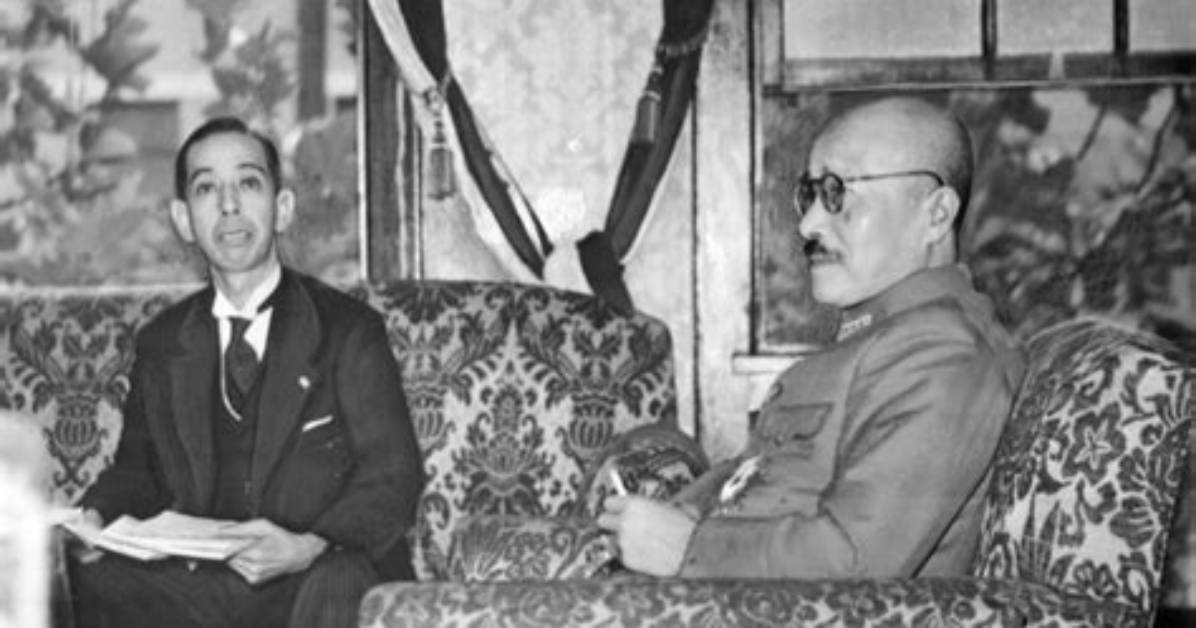
Names like Hideki Tojo are often suppressed when recounting historical people. Why? All the reasons you need are in some of Tojo’s aliases – Japan’s Razor of Fear. Human history tends to forget the names of those who caused indescribable pain and suffering to others. However, this doesn’t mean we can’t learn from these lives.
Hideki Tojo is renowned for his participation in the Pacific War, especially the attack on Pearl Harbour. Even after the ugly end of his life, Hideki Tojo is still immortalized at the Yasukuni Shrine. This piece will reveal important details about Tojo’s life. We’ll discuss his early life, military career, journey to becoming the Japanese Prime Minister, participation in WWII, and life legacy.
Early Life of Hideki Tojo
Hideki Tojo was a Japanese politician, general in the Imperial Japanese Army, and notorious war criminal. He lived between December 30, 1884 – December 23, 1948. Tojo’s most remarkable moments occurred during WWII.
During the Second World War, he served as Japan’s prime minister and president of the Imperial Rule Assistance Association. Hideki Tojo was not shy to commit extreme acts of violence against the Japanese state. His goals were to support Japanese ultranationalism. But what were the events that happened during Tojo’s early life?
The first thing to note is that Hideki Tojo was born to a low-class samurai family on December 30, 1884. His family stayed in the Kojimachi district in Tokyo.
Tojo was born as the third son of a lieutenant in the Imperial Japanese Army. No doubt, this influenced his decision to join the army later on. During this period, the Japanese community was typically divided into four categories (castes); peasants, samurai, artisans, and merchants.
When the Meiji Restoration occurred in 1871, the societal castes were abolished. However, many people still recognize this system of social classification.
As a result, those from the samurai line continued to enjoy the benefits of their family heritage. The Tojo family came from a long heritage of Samurais. However, they were nothing more than lowly warriors for the noble daimyos. Tojo’s parents were respectable members of society but relatively poor. His father was a samurai turned army officer, and his mother was the daughter of a Buddha priest.
Hideki Tojo’s Education
Hideki had the same level of education as other Japanese children born in the Meiji era. The Meiji educational system was designed to train boys to become soldiers when they became adults.
This was achieved by constantly teaching boys that war was beautiful. They were also taught to revere the emperor as a living god and always be prepared to die for him. On the other hand, girls were trained to be loyal child bearers for the emperor. Their purpose was to deliver many sons to fight for the emperor.
As a young child, Tojo stuck to the teachings of the educational system. He was a stubborn boy with a poor sense of humor and was regularly involved in fights.
Aside from fighting, Tojo was engaged in precarious activities. Much of Tojo’s behavior was excusable because Japanese schools were quite competitive. There was no sympathy for failure, and the weakest students were preyed on by teachers and their colleagues.
Hideki Tojo Joins The Military
Reports have indicated that Hideki Tojo could have been a better student in his class. He only had average intelligence. However, he was already ready to work hard to complement this shortcoming.
As a boy, Tojo idolized Tokugawa Ieyasu, a 17th-century Shogun. Following his father’s footsteps, he enrolled in the Army Cadet School in 1899.
Despite being only a young adult, Hideki Tojo was a part of Japanese outrage at the Treaty of Portsmouth. The events of the Treaty of Portsmouth left a bigger taste in the mouths of the Japanese people.
They felt America had cheated them in their favor of itself. According to them, Japanese gains from the treaty were meager and unacceptable. The Treaty of Portsmouth was infamous and sparked Anti-American protests known as the Hibiya Incendiary incident.
The lack of information during the period meant many Japanese did not understand that the war with Russia had depleted the nation’s resources. Instead, they felt the American President, Theodore Roosevelt, had defrauded them of their benefits. Tojo’s role during the treaty left him with an unwavering dislike for Americans.
Military Career of Hideki Tojo
It’s safe to say that Hideki Tojo had a colorful military career. He served in different positions and had a military career that inspired many Japanese soldiers. Hideki Tojo graduated from the Japanese Military Academy as the 10th-best trainee out of 363 cadets.
Upon his graduation, Tojo was commissioned as the second lieutenant of the Imperial Japanese Army. Between 1918 – 1919, he was a part of the expeditionary force sent to interfere in the Russian civil war. Also, he was a military attaché to the Germans between 1919 and 1922.
During the 19th century, the Japanese army was trained by the Germans. As a result, this left a strong impression on Japanese soldiers, including Tojo.
Japan followed suit when the Germans started preparing for the next war in the 1920s. Japan opted for the creation of the National Defense State. In 1922, Tojo had a brief visit to America. During this period, he called the American people a materialistic and soft society that invested heavily in trivial activities like partying, sex, and drinking.
Hideki Tojo proved he had an undying commitment to his work. All his hobbies were work-related. He was also known to regularly bring home paperwork and spent time on his tasks till late into the night.
Tojo didn’t spend any time raising his kids because he viewed it as a distraction – and a woman’s duty. Tojo’s stern, humorless, and cold nature also extended to the men under his command. He would regularly slap the faces of his men when giving commands.
By 1928, he became the bureau chief of the Japanese Army before he became a colonel in the army. During this period, Tojo began to take an interest in military politics. He was dedicated to his duties and would regularly visit the homes of his men. He would assist these men with personal problems, even giving them loans.
Hideki Tojo’s rise to the higher echelons of the military didn’t end there. In 1934, he was promoted to the major general and functioned as the chief of the personnel department.
Tojo’s work wasn’t restricted to the battlefield. He also contributed in terms of literary works. He was responsible for creating a chapter in the book, Essays in Time Of National Emergency. The content of this book geared Japan to become a national defense state.
This book had fifteen chapters, each written by senior generals. They argued that Japan had defeated Russia due to the Bushido principles. Their solution to winning future wars was to apply the principles adopted in Russia on a much larger scale.
Furthermore, Tojo also became the commander of the Infantry Brigade of the Imperial Japanese Army. By September 1935, he was already commander of the Kenpeitai of the Kwantung army in Manchuria.
When Hideki Tojo got this announcement, he was nationally known as Razor, with a reputation for being a fast decision-maker. Tojo belonged to the Army’s Toseiha (Control) faction, a group opposed by the Kodoha (Imperial Way) Faction. While both factions believed in dictatorship and expanding their military powers abroad, there were slight differences in how they planned to carry out their plans.
The Imperial Way faction believed in using assassinations to take control of power, while the Control faction was ready to accept available reforms.
As a sign of good faith, Hideki Tojo was appointed as the chief of staff for the Kwangtung army. After his appointment, Tojo explained that his first duty would be to prepare for a war with Russia. However, he supported his country’s policy to expand and influence China.
As the chief of staff, Tojo was tasked with increasing the Imperial Army’s penetration on the Inner Mongolia border. Hideki Tojo got his first taste of military action when he led units of the 1st independent Mixed Brigade on Operation Chahar. This operation marked the beginning of the Second Sino-Japanese war.
Following the incidents of Operation Chahar, Tojo directed his men to attack the Hebei Province and some other parts of northern China. He also went against German protests by accepting Jewish refugees.
Tojo’s time at the battlefront was brief after he was invited back to Japan to serve as Vice-Minister of War in 1938. Finally, Hideki Tojo served as Inspector-General of Army Aviation between 1938 – 1940.

