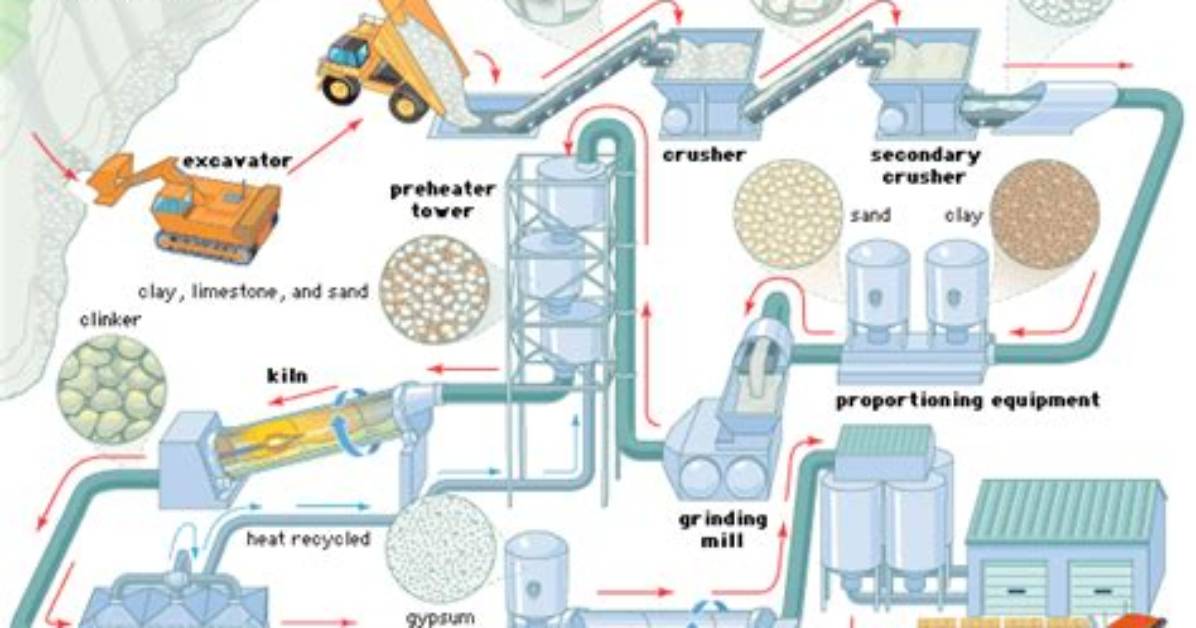
Cement, a fundamental component of the construction industry, serves as the binding agent that holds together the building blocks of our modern infrastructure. Understanding the intricate process of manufacturing cement unveils the fascinating blend of science and engineering that contributes to the development of durable and resilient structures. In this comprehensive exploration, we will delve into the stages, technologies, and environmental considerations involved in the manufacturing of cement.
The Raw Materials:
1. Limestone:
Primary Component: Limestone serves as the primary source of calcium in cement
production. It is typically extracted from quarries and mines.
2. Clay or Shale:
Secondary Component: Clay or shale, rich in silica, alumina, and iron oxide, complements limestone in the cement-making process.
3. Silica, Alumina, and Iron Ore:
Supplementary Components: These materials, often obtained from bauxite, iron ore, and other sources, enhance specific properties of the final cement product.
Stage 1: Mining and Raw Material Preparation:
1. Mining Operations:
Limestone Quarrying: Limestone deposits are extracted through quarrying. The quality and composition of the limestone play a crucial role in determining the characteristics of the cement.
2. Crushing and Blending:
Raw Material Preparation: The extracted materials undergo crushing and blending to achieve a consistent and homogeneous mixture. This blend, known as raw meal, forms the basis for the subsequent stages.

